Sunday, 2 May 2010

Self and Work Evaluation

Description of me as an individual:
Considerate
Determined
Critical

My approach to life is...
Reflective
Flexible
Organised
Laid back
Decisive
Direct
Objective

I want to be...
Committed
Punctual
Informed
Organised

Qualities I look for in others...
Honesty
Ambition
Confidence
Commitment
Responsibility
Focus
Punctuality

10 things I have learnt:
1. Further knowledge in design techniques
2. Further knowledge in the design industry.
3. Timekeeping skills.
4. To have designed in areas out of my comfort zone.
5. Become more grown up and able to adapt to situations better.
6. A Better idea of who I am as a designer and my individual style.
7. A good body of work that I'm proud of.
8. More skills with working alone and in collaboration.
9. A good balance between work and leisure.
10. It is better to try and fail than not to try at all.

10 things I want to learn:
1. Better presentation skills.
2. Gain confidence speaking to large groups.
3. Advertising fashion design.
4. Better photography skills to produce high quality images.
5. Drawing techniques.
6. More techniques in concept building.
7. Professional methods, creating high quality finishes and low cost.
8. Better eye for layout design.
9. Look at more existing work for inspiration.
10. More digital design skills.

Description of my ambitions as a designer:
Creative
Commercial
Effective
Ambitious

I want my work to...
Persuade
Seduce
Promote
Attract
Entertain
Package

Words associated with my work:
Product
Idea
Audience
Concept

I have developed skills in areas such as:
Type
Colour
Concept building
Photography
Composition
Idea generation
Research

I need to develop skills in areas such as:
Video
Print
Drawing
Image

I am interested in developing skills in...
Typography
Interactive design
Book design
Illustration
Photography
Advertising
Information graphics.

Tuesday, 20 April 2010

Communication is a Virus Evaluation

Working alongside Roz and Becky we decided to focus on 'getting people to do something new'. All of the titles to choose from were very broad and still left a big margin for us to decide what we wanted to design and create. Getting people to do something new, I found it quite easy to come up with a range of ideas for this subject because today in the world a lot of people do the same thing day in and day out. Just trying to get people to step out of their comfort zone or timetabled lifestyles is a very healthy idea, an idea which could be developed into many resolutions.

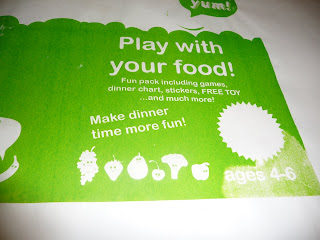
After brain storming many ideas we decided to create a pack aimed at children aged 4-7 specifically to help them enjoy more healthy foods. It is a well known fact that child obesity is becoming a problem. We found many statistics online to back this up as well. There are already existing campaigns to help tackle this impending issue and most which seem quite tired and over worked. We wanted to create a pack which didn't associate food as being 'good' or 'bad' and pushing the idea that all food's are good in moderation and how eating is a fun experience.

Whilst researching we took note of all the ways previously tried and tested, and tips which helped to encourage children to try more types of food.

We made conscious design decisions to appeal to both the parent and child alike. Bright colours and a healthy clean look attract by making the product look eye catching and fun whilst still remaining to look healthy and a helpful product.

I feel like over the time scale given, we have created a good all rounded product. I feel I have worked very hard for this project, but I feel if I hadn't been part of a group my idea wouldn't have been as strong. Having two people to work alongside enabled us to bounce ideas off each other quickly and therefore we worked at a much faster pace and produced a much more well thought-out and flawless design.

I always feel very nervous when I hear that there is a group project around the corner, and needless to say this project has had it's fair share of disagreements, but overall I feel it has run surprisingly smoothly. I feel this was helped by the initial 'lonely designer' ad that we made and replied to.

Our ideas were quite ambitious and originally we were planning to make an advert as well advertising the product. However there just wasn't enough time. If it were to be sold in shops an advert would be more necessary to help promote it, but at this stage it was the least important part of the project.

For this project I found, due to the fast pace we were working at, it was hard to write all of our ideas down. After the initial ideas brain storming session it all seems a blur of quick decision making and basically getting on and doing the task in hand. Regrettably this made my sketchbook suffer greatly and most of the evidence and ongoing documentation lies in experimentation of actually making the product, ideas which had flaws eg. box sizes, robustness and screen printing.

Upon completion of a project you can always look back and see ways you could have improved things. This project in particular left us kicking ourselves when we decided to seemingly waste two days of our time in the screen printing rooms. Only sharing a general knowledge of screen printing amongst the group trying to print our whole project this way was somewhat of a learning curve. A failed learning curve, but still a learning curve. Our designs were quite complicated in relation to our knowledge of the process and needless to say the finished prints weren't to a highest standard. So after two days in the printing rooms we admitted defeat and resorted to digitally printing the designs. Looking back now I feel we should have considered digitally printing before hand as it is a very quick method and still produces the same results. Brushes and textures can be added digitally to create the illusion of screen printed work.

Screen print attempt:


Overall

I feel very happy with the finished product. Our group worked well together and I think everyone would agree that together our idea was much stronger than it would have been if we had worked alone. I feel my time management skills have improved greatly on this project. Partly because when working in a group I don't want to let people down and so I am more inclined to work to my full potential.

When working in groups there are always people who do not share the same working style and therefore personalities can clash. It is important be be flexible and listen to all ideas put on the table. I feel I am a very open minded person and work well in groups and can adjust to situations well. This said I feel the project has overall gone very well and in mainly smoothly.


Final Products


Monday, 19 April 2010

Monday, 8 March 2010

2 weeks in the life of Ellis Thynne

These quick weekly plans really helped me keep on track with what I had to do and for when. I hope I can keep continuing to use them.


Sunday, 14 February 2010

Collection 100 Rational

I have decided to promote a new shoe company by packaging gift bags including chocolate shoes inside mini shoe boxes to be distributed at an exclusive vip event. I have made this decision because I want to create new idea for advertising newly launched designer brands instead of just creating a poster and advertisement.

My audience is women who love to shop, between the ages of 21 and 35. I will engage them by making a luxurious looking brand which 'promises' to make your shoe life better.

The product will inform and instruct telling people about the new product, where to get it and when it is launching. People need to know about something before they buy it. New brands are always competing and this quirky product will hopefully do so.

The audience will either attend a vip event launching the new shoe brand or receive it whilst shopping in a store ... first 100 customers, for example, get the free gift. Information will be inside with the gift.


Problem Analysis - Rational

BRIEF - What is the problem you intend to solve?
Advertisement for a new shoe brand launch.

Who needs to know? - Audience?
21-35 year old shoe-loving women.

Why do they need to know?
Because they may be interested in buying new shoes or interested in the brand.

What will they respond to?
A gift bag given to them with information about the launch date and place etc.

What research is required?
About the target audience, existing shoe brands, most popular shoes, packaging methods.


Graphic Design Week Planner

Monday

8.00- 9.10 - Wake up, shower, clothes, make up, cereal.
9.10 - 9.25 - Walk to college.
9.25 - 9.35 - Wait for tutors.
9.35 - 10.35 - Briefing/ seminar.
10.35 - 10.50 - Break.
10.50 - 12 - Work on collection 100 project
12 - 12.10 - Walk home.
12.10 - 12.45 - Prepare and eat food.
12.45 - 12.55 - Walk back to college.
1 - 2.20 - Work on tie keeping.
2.20 - 2.40 - Break.
2.40 - 3.30 - Work on time keeping.
3.30 - 3.45 - work on idea for 100 project.
3.45 - 4 - Library.
4 - Hand camera back.
4 - 4.10 - Walk home.
4.10 - 5 - Eat.
5 - 7 - Nap.
7 - 11 - Watch tv.
11 - 12 - Eat
12 - 2 - Tv.
2 - Sleep.

Tuesday

11 - Wake up
11 - 12.30 - Get ready
12.30 - 12.45 - Eat
12.45 - 12.55 - Walk to college.
1 - 2.30 - Work on time line - visual language.
2.30 - 2.45 - Break.
2.45 - 3.30 - Work on time line.
3.30 - 4 - Chat at college.
4 - 4.10 - Walk home.
4.10 - 5 Talk with bf.
5 - 6 - Cook and eat.
6 - 1 - Nap and watch tv.
1 - Sleep.

Wednesday

12 - Wake.
12 - 1 - Eat.
1 - 5 - Working ( list of to do 10 mins, % of time keeping 30mins, lecture notes copy up, get work I've missed off moodle 2h, sort notes out for meeting with Richard - 5.)
5 - 7 - Dinner and tv.
7 - 10 - Work.
10 - 11 - Big bro on tv.
11 - 1 - Work.
1 - 2 - Get ready for bed and sleep.

Thursday

8.30 - Wake up.
8.30 - 9.10 - Get ready.
9.10 - 9.20 - Walk to college.
9.30 - 12 - Final cut - including 15 min break.
12 - 12.15 - Walk home.
12.15 - 1 - Eat.
1 - 2.30 - Work, ideas for 100 brief.
2.30 - 4.30 - Town shopping for supplies for 100 project.
4.30 - 7.30 - Photography elective.
7.30 - 8 - Eat.
8 - 9 Get ready to go out.
9 - 3 - Out at bourbon.
3 - 4 - Walk home and relax.
4 - 5 - Takeaway.
5 - Sleep.

Friday

8.50 - Get up.
8.50 - 9.10 - Get ready.
9.10 - 9.25 - Walk to book binding talk.
9.30 - 12 - Book binding including 15 minute break.
12 - 2 - Walk home, eat and rest.
2 - 3 - Walk to town, look at art exhibition and shop.
3 - 4 - Eat out.
4.30 - Back home.
4.30 - 9 - Sleep.
9 - 10 - Cook and eat.
10 - 11 - Tv.
11 - Sleep.
END OF MODULE SELF-EVALUATION

1. What skills have you developed through this module and how effectively do you think you have applied them?

I think I have learnt how to time keep better this module, increasingly more so towards the end and with the 'collection 100' product part. I didn't think I found it hard working in groups, but I seem to have found where I fall down. Communication within group work is vital and no matter what methods we attempted they didn't seem to embrace the whole group. In this sense I think i have developed survival skills, in that you do your best with what you have to work with and everything seems to pull together in the end one way or another.

Having chosen a subject which interested me for the 'collection 100' project I found myself much more engaged and wanting to get my head down and work. By choosing a subject I enjoy I found interesting research because I wanted to learn more about it. In previous projects I have normally started off with a subject that interests me but then decided to go somewhere completely different which doesn't interest me so much, I'm not quite sure why but it always seems to happen; so for this project I tried to stay as focused on 'me' as possible to create a final outcome which used my full potential.

I thought long and hard and decided reasonably quickly what I wanted to create and realising the huge work load I had set my self I think I panicked slightly which put me into turbo work mode to collect all the materials I would need and research more thoroughly what I wanted to achieve. After this brief panic I realised I had enough time to manufacture these chocolate shoes with precision and passion and not in a mad rush, making my time management at its best.

2. What approaches to/methods of research have you developed and how have they informed your design development process?

I have been a lot more hands on in this project, because it is mainly research based you have to get out there and see the issues for yourself and not just put yourself in a cocoon of ideas which may or may not be true. Approaching the target audience and going out and recording the issue in hand for the 'what if' project made our design decision much more informed ad valid. For the 'collection 100' project I tried to look at every aspect I could think to do with shoes. I went out to Leeds main shopping street to tally types, styles colours, etc of shoes people were wearing, interviews with cobblers and shop sales persons, photographs of shoes in their advertising environment, the history of the shoe etc. Getting a wide range of information helped me decide what my next step would be for the project.

3. What strengths can you identify in your work and how have/will you capitalise on these?

I think precision and detail are two of the main things I enjoy focusing on in work. Crafty and fiddly things interest and encourage me. Seeing a clear path of what I have to create and where I have to get helps me plan and work to my best ability. Although research can be somewhat tedious it is in the long run the backbone for every project so I will ensure to thoroughly research every project to come.

4. What weaknesses can you identify in your work an how will you address these more fully?

I think one of my main weaknesses is finding an idea that I like and not wanting to change it once I have it. Obviously with short time scales fast paced thinking is necessary but looking into other ideas could improve my final outcome. I can sit and think about what I want to do but I wont write down idea which I have though of and scrapped, I should write them down as evidence.

5. Identify five things you will do differently next time and what do you expect to gain from doing these?

1. Experiment with more ideas before I stick with one to carry through.
2. Work on presentation skills for my work to give a clearer projection of my idea.
3. Assign individual roles when working in a group.
4. Think about costs of an idea and practicality of producing it.
5. Look at more resources such as books to get inspiration.

If I do all of these and work to my full potential my work should be of the highest standard.

6. Grading...

Attendance: Very good
Punctuality: Excellent
Motivation: Excellent
Commitment: Excellent
Quantity of work produced: Excellent
Quality of work produced: Very good
Contribution to the group: Good